Product Guides
Leather Hide Yield Rates: The Cost Variable Most Sofa Buyers Never Calculate
Two factories quote the same three-seater in full-grain leather and the prices differ by double digits. Before assuming one is pad
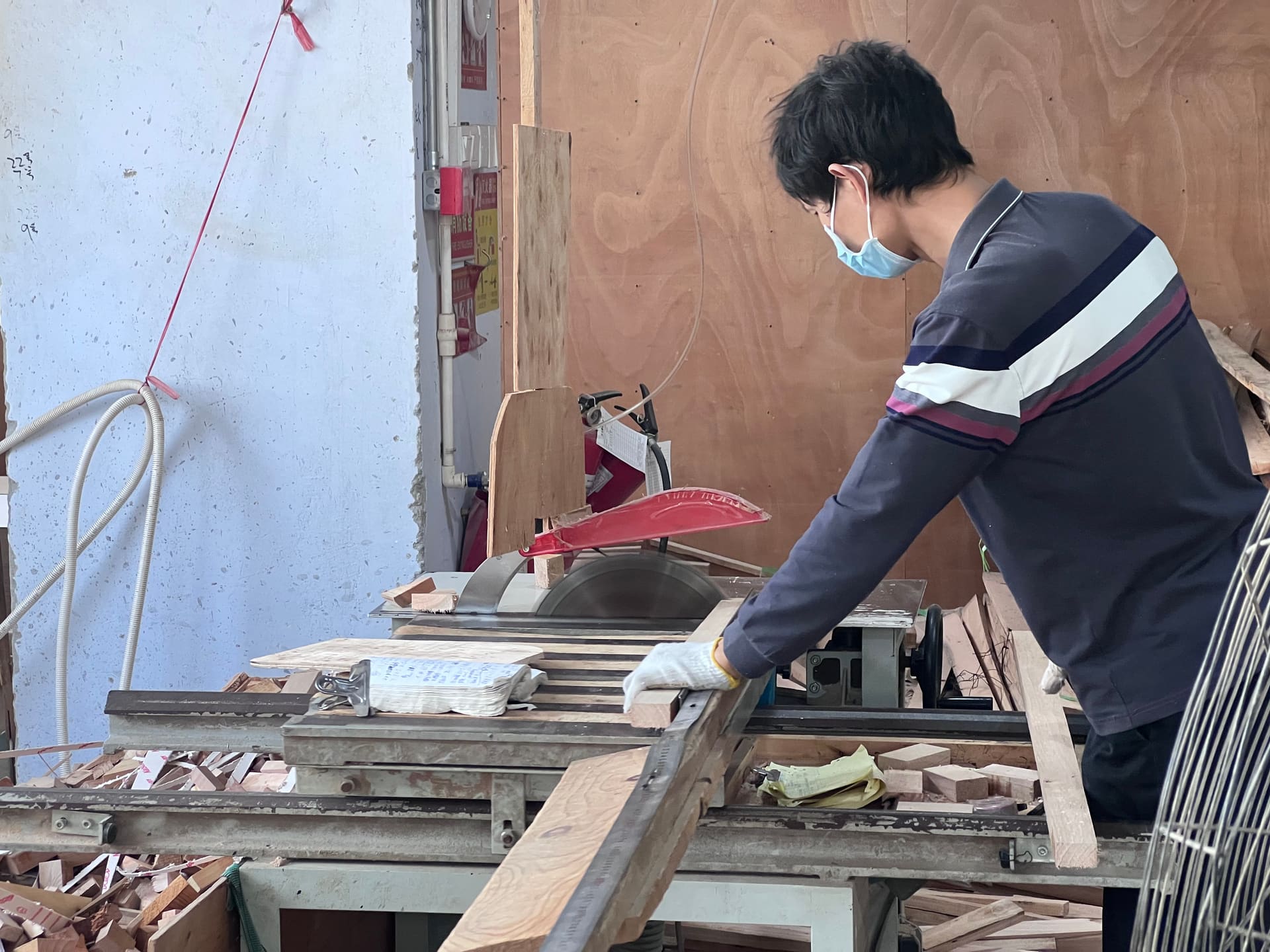
Open a factory quote for a sofa frame and somewhere in the line items sits a code: BB/CC, CDX, B/BB. To most buyers these look like alphabet soup. To the engineer who has to honor a ten-year warranty, they are the difference between a frame that holds its joints tight past year ten and one that starts creaking through year two. Importers who cannot read plywood grade codes are flying blind on structural quality — and paying for the privilege through returns they cannot trace back to the material spec.
A plywood grade is written as two letters separated by a slash: face/back. The first letter grades the visible face veneer; the second grades the back. Core construction is graded separately and often omitted entirely on factory quotes — a silent trap, because a panel can carry a BB face over a void-filled core that releases every screw driven into it.
A BB/CC panel has a BB face, a C-grade back, and an unspecified core. CDX carries a C face, a D back, and an X-rated glue bond. B/BB is the furniture upgrade for visible structural elements like exposed stretchers and slatted headboards.
Here is where importers lose money. The "X" in CDX does not describe veneer quality. It describes the adhesive: exterior-grade, water-resistant, boil-tested glue line. A CDX panel has a C-grade face, a D-grade back, and exterior glue — but the veneers themselves are the lowest commodity grades the mill produces.
Buyers see "exterior" in the X and assume they are buying a better panel. They are not. They are buying a construction-grade panel that happens to use moisture-resistant glue. For a sofa frame hidden under upholstery in a climate-controlled room, the X glue bond is wasted; the C and D veneers are a structural downgrade that matters at every staple. For furniture frames, BB/CC is almost always the right call. CDX belongs on construction sites, not in upholstery frames.
Within the same core, a B/BB panel runs 18 to 24% above BB/CC, and BB/CC runs 35 to 45% above CDX at equivalent thickness. An 18 mm CDX sheet might land at USD 14 ex-mill; the equivalent BB/CC at USD 20; the B/BB at USD 24. But cost is not the lever that matters — structural performance is. Face veneer quality correlates directly with three failure modes:
A frame built from CDX will pass the first-year warranty and fail in years three to five. A BB/CC frame holds joints tight past the decade mark.
Vague specifications invite substitution. The PO must lock:
A spec on paper means nothing without field verification. Three checks separate the spec from the substitution:
Count knots and patches on the face. BB permits knots up to 50 mm but they must be sound — closed, not open. Open knotholes on a face claimed as BB indicate the factory substituted a lower grade.
Cut a sample panel corner, or pull from the factory's offcut bin. Count the plies: an 18 mm panel should carry 9 to 11 plies. Fewer plies at the same thickness means thicker veneers, which is structurally inferior for furniture. A 7-ply 18 mm panel is a construction panel regardless of grade stamp.
Drive three 16-gauge staples into a frame rail offcut at the same depth and angle used in production. Pull each staple with a pry bar and a force gauge. A BB-grade face holds a staple at 40 to 60 N pull force before fiber tear. A CDX face releases at 20 to 30 N — half the holding power. Variance above 15 N across three staples indicates inconsistent veneer — a substitution warning sign.
Plywood grade codes are not alphabet soup — they are the difference between a frame that holds staples tight for a decade and one that creaks through year two. The buyer who specifies BB/CC, locks the core and tolerance in the PO, and verifies with a staple pull test buys frames that build a brand. The buyer who accepts "furniture-grade plywood" on a quote buys whatever the factory had on the floor that week.

Two factories quote the same three-seater in full-grain leather and the prices differ by double digits. Before assuming one is pad
A dining chair seat shell is the component that decides whether the chair lasts three years or thirty. The material underneath the
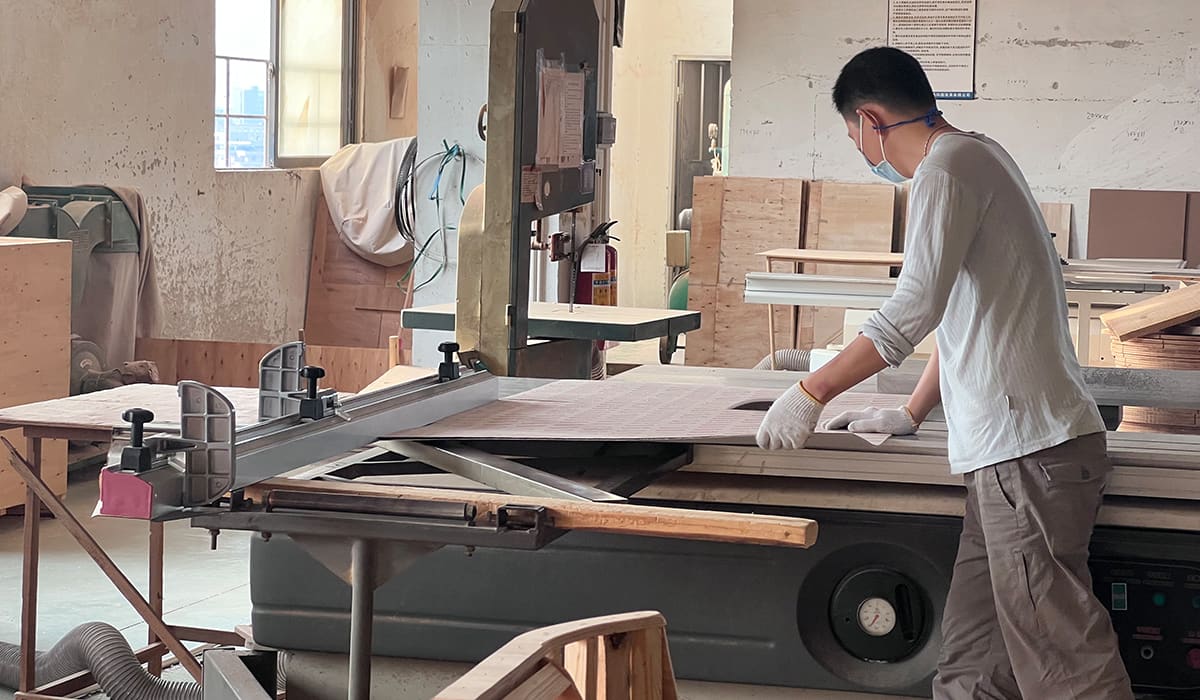
A field-tested guide to identifying, verifying, and qualifying furniture source factories in China. From distinguishing real facto

SCAN TO ADD OUR WECHAT
Leave a Comment