Product Guides
Restaurant Furniture vs Home Dining Furniture: Key Differences for Commercial Buyers
A buyer's guide to commercial vs residential dining furniture: frame construction, Martindale rub count, fire retardant standards,
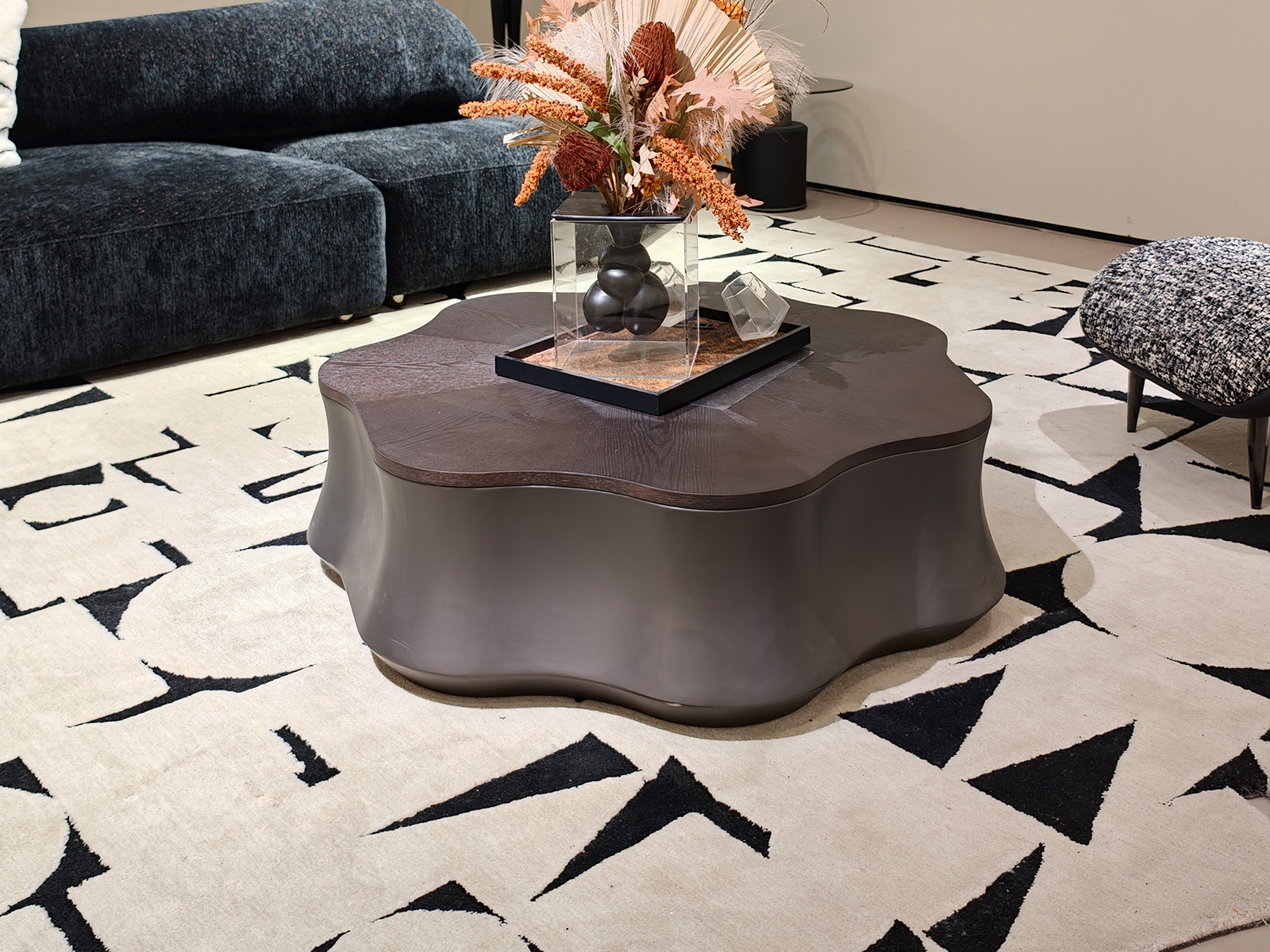
Short answer: a coffee table program is decided by three things — what the top is made of, how the base is welded and finished, and how the tables pack into the container. Standard catalog models carry no per-model MOQ and can be mixed with other furniture in one 40HQ container; custom designs start at 5 pieces per design, and a build from your own drawing can start at 1 piece. Standard production runs 30–45 days, custom and OEM programs 45–60 days.
Coffee tables are the easiest furniture category to get wrong on landed cost. A marble top that arrives chipped, or a brass finish that does not match across a batch, costs more than the table ever earned. This guide covers what to specify before you commit container space.
Four specification decisions determine whether a table program is profitable: top material, base construction, format mix and packing.
Tables sit at the low end of the unit-value scale, but they are the highest-fragility category in a living room set. Buyers judge the program on whether the top survives the ocean leg, whether the base finish matches the sample, and whether the formats on offer match how the market actually lives. All four parts need to be agreed before a quotation is meaningful:
Our nine current models cover all four discussions; the full set is listed in the coffee table catalogue and introduced on the coffee table collection page.
Stone sells the premium story, glass sells small-space living, and solid wood sells repairability — pick the top against the market, not the catalogue.
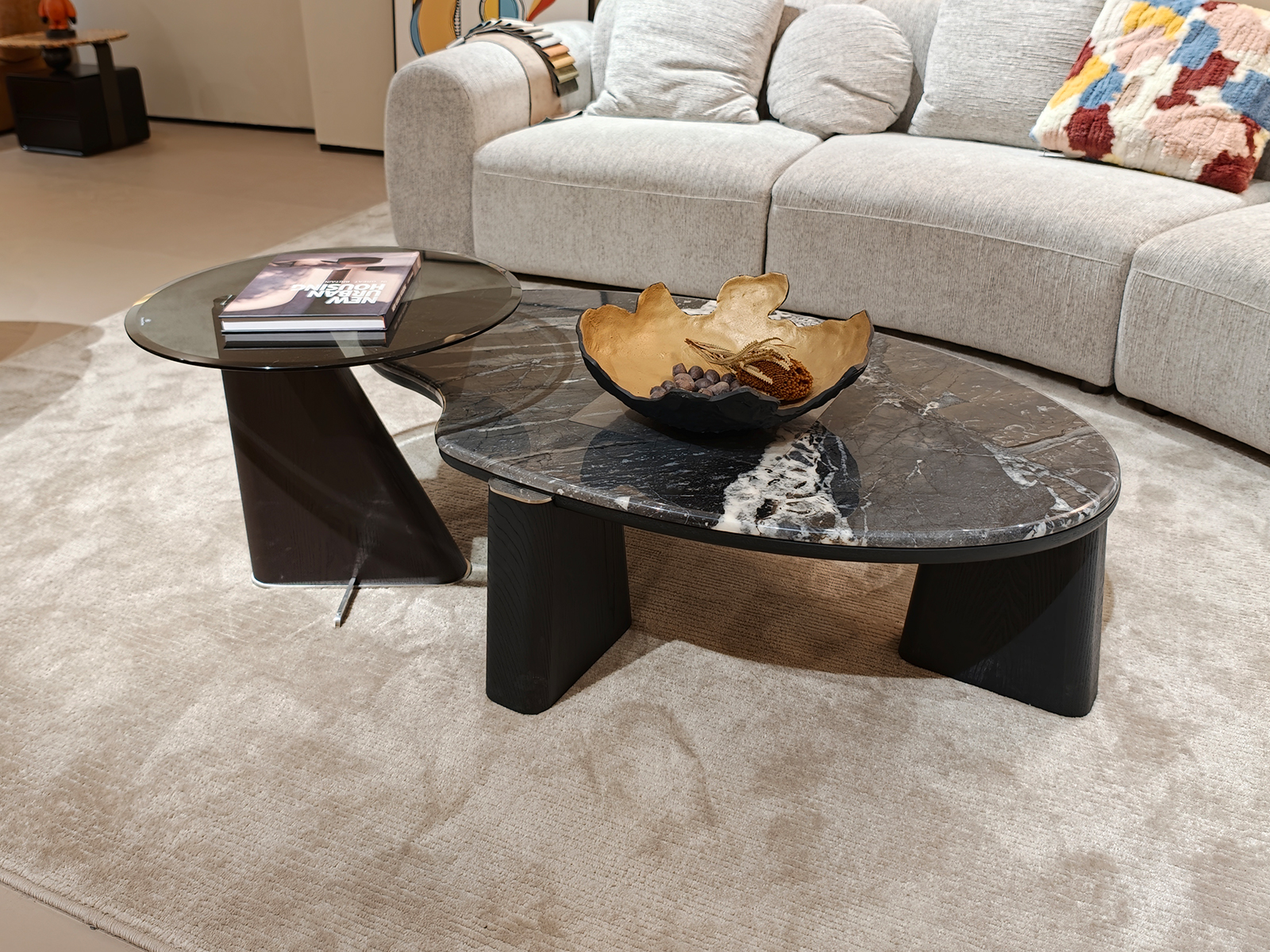
Marble and travertine. Slabs are hand-selected for veining, so no two units are identical. That is the selling point in a premium living room set, but it is also the specification point: buyers should agree in writing that natural variation is acceptable and that the approved sample is a reference for tone and finish, not an exact match. Stone is heavy and unforgiving in transit, so edge protection and crating matter more than for any other top. The CT280 marble top table is the current stone build.
Tempered glass. Glass tops are offered in high-clarity and smoked versions. Glass keeps a small living room visually light, which is why it moves well in apartment markets, but it demands the most careful crating in the range: separated, corner-protected, and never stacked under anything heavy. The CT690 glass shelf table is the current glass reference.
Solid wood. Wood tops are the repair-friendly option — a scratch can be sanded and re-finished, which matters for hospitality and rental programs where the table takes daily abuse. Wood also carries a warmth that stone and glass cannot. The CT540 solid wood table covers that direction.
Whichever top you choose, quote the top and the base as separate line items. Buyers who price them as one unit lose the ability to rebalance the mix when a retailer wants the same base with a different surface.
A welded frame with clean joints and no flex is the difference between a table that survives a showroom floor and one that comes back.
All metal bases are precision-welded, then finished in one of three standard families: brushed brass, matte black or polished chrome. Finish consistency is the quality point buyers underestimate. Brass, black and chrome all read differently under retail lighting than under factory lighting, so a production batch should be checked against the approved finish sample, not against a photograph. Specify the finish family, the sheen and the acceptable variation at the start; correcting a finish after the goods are crated is not practical.
Base design also decides whether a table can nest. Multi-level nesting sets can be expanded or compacted to suit changing needs, which gives a retailer two display options from one footprint. The CT980 nesting table is the current example.
Follow the rooms your retailers actually sell into, not the design team's favourite silhouette — the format mix, not the top, is usually what makes a first order sell through.
A practical starting mix for a new market is one rectangular, one round, one nesting and one lift-top or storage model. That covers the volume format, a design format, a space-saving format and a functional add-on without over-committing container space to a single silhouette.
There is no per-model MOQ on standard models, and that is what makes a first order viable: you can test four formats without committing to a full container of one.
All four shipping terms are quoted: EXW, FOB, CIF and DDP. If you are consolidating several categories, read the container loading guide before fixing quantities, and the MOQ and lead-time verification guide for how to check these terms against a new supplier.
Packing is designed for the weakest point in the journey — the container handover and the last mile — not for the ocean leg.
Stone tops need edge protection and a crate that does not allow movement; glass needs corner protection and a dedicated position in the load; welded bases need wrapping that survives rubbing against neighbouring cartons. Every shipment is covered by photo and video QC reports at three stages — incoming materials, in-line production and finished goods — and the factory's 25-point QC protocol includes frame stress testing and a 100% pre-shipment visual inspection of the finish. You or a third-party inspector are welcome on site before the container is sealed; the factory page explains the process.
Loading is where a table order is won or lost on cost. Stone tops are weight-critical, glass is volumetric, and nesting or lift-top models pack differently from a fixed rectangular table. Build the container around the seating order and fill the remaining space with tables, rather than shipping tables as a standalone load.
Six fields are enough to get an accurate price back the first time: model or drawing, top material, base finish, dimensions, packing requirement and destination market.
The same logic applies to seating; the RFQ field guide for sofas explains why each field changes the quotation.
Send the top material, base finish and target quantity. Standard models have no per-model MOQ, and tables can share a 40HQ with your seating order.
Address: No. 4, Jianye 2nd Road, Shatou Nanjin Village Industrial Zone, Jiujiang Town, Nanhai District, Foshan City, Guangdong Province, China
WhatsApp / WeChat: +86 150 1742 8790
Email: [email protected]
There is no per-model MOQ on standard catalog models, and different models can be mixed in one 40HQ container. Custom designs start at 5 pieces per design, and a build from your own drawing can start at 1 piece.
30–45 days for standard catalog models, and 45–60 days for custom and OEM programs. Sampling and finish approval happen before the production clock starts.
Yes. Standard models can be consolidated with sofas, beds, dining sets and other categories in one 40HQ, and with your other suppliers in the same container. Tables are usually used to fill the space left after the seating order is loaded.
Tempered glass and natural stone both ship safely when crated correctly, but they need different protection: glass needs corner protection and a dedicated position in the load, while stone needs edge protection and a crate that prevents movement. Solid wood has the simplest packing profile and is the easiest to repair after delivery.
Yes. We work to an approved finish sample in brushed brass, matte black or polished chrome, and custom programs can be produced to your drawing or reference. Finish approval happens on a physical sample, not a photograph, because the same finish reads differently under factory and retail lighting.
Yes. Photo and video QC reports are sent at incoming, in-line and finished-goods stages, and you or a third-party inspector can inspect the goods on site before the container is sealed.
If you are building a full living-room container, start with the coffee table catalogue and the coffee table collection page, then check the sofa RFQ field guide for the seating side and the MOQ and lead-time verification guide before you compare quotations.

A buyer's guide to commercial vs residential dining furniture: frame construction, Martindale rub count, fire retardant standards,
Ten questions buyers ask before a Foshan furniture order — MOQ, mixing models, lead time, payment, samples, inspection and how to

A firsthand account of our November 2026 factory visit — furniture buyers from Scandinavia spent three days on the ground in Fosha

SCAN TO ADD OUR WECHAT
Leave a Comment