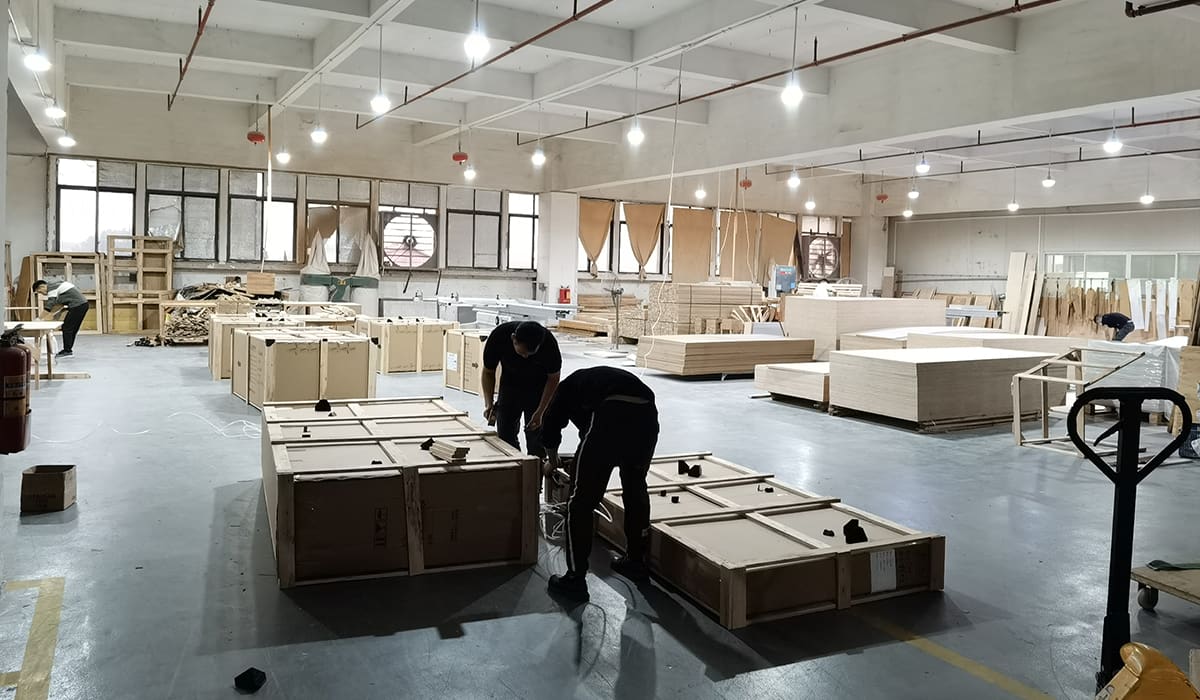
Shipping & Logistics
Roll-Pack vs Flat-Ship Mattresses: Container Economics for Wholesale Buyers
The bed-in-a-box format built its reputation on e-commerce convenience, but for wholesale buyers the packing decision is pure arit
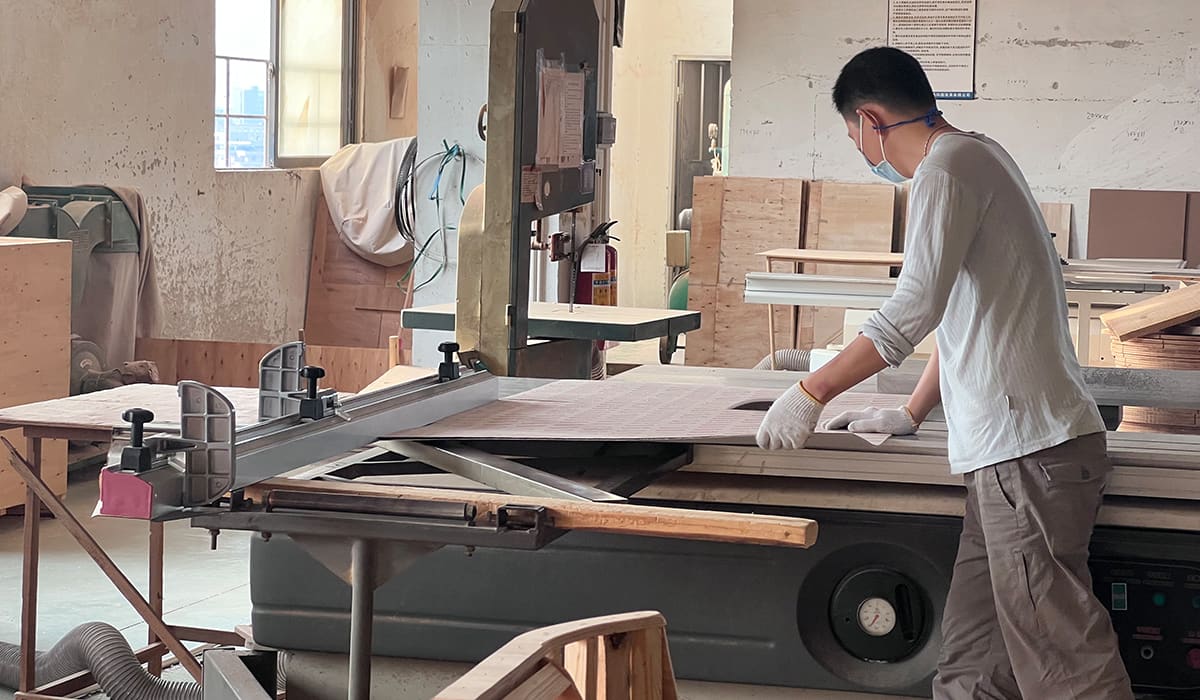
Short answer: verify the factory before you pay a deposit, not after. Source from the right Chinese furniture manufacturing cluster for your product, confirm the supplier is the actual factory rather than a trading company, audit its documents and production line, validate quality with a paid pre-production sample and an independent third-party inspection, and protect the order with certifications and payment terms that shift risk back to the supplier.
This is the same verification protocol we give our own B2B clients at ATTICO CASA in Foshan — the documents to request, the on-site cues to look for, and the red flags that should end the conversation before you sign a purchase order.
The furniture importer who loses money on a China order almost never loses it on the product. The product arrives, it looks fine, and it passes the inspection the importer paid for. The money is lost on the rework, the warranty claims, the delayed deliveries, and the second sourcing round when the first factory turns out to be unqualified for the order it accepted. Every one of those costs traces back to a single decision: which factory to work with.
This guide is written from the production floor in Foshan, where ATTICO CASA manufactures sofas, beds, mattresses, and dining furniture for B2B importers worldwide. It covers what we tell our own clients to check before signing a purchase order — not theoretical sourcing advice, but the specific documents, physical cues, and sample protocols that separate a factory that can execute from one that can quote.
China's furniture industry is not one market. It is a collection of specialized clusters, each with a dominant product type, a typical price tier, and a characteristic factory size. Knowing which cluster your product belongs to is the first filter, because it determines which factories have the tooling, the skilled labor, and the supply chain to actually make your product.
Foshan's Shunde district is the largest furniture production cluster in China, with thousands of factories producing upholstered furniture, mattresses, and beds. The supply chain is vertically integrated within the cluster: foam suppliers, spring units, fabric mills, leather tanneries, woodworking shops, and hardware manufacturers are all within a 30-minute drive. This density means a Foshan factory can source components quickly, compare suppliers on price, and switch a foam grade or a fabric without a three-week lead time. It also means the cluster has factories at every quality tier — from hand-assembled workshop operations to automated mattress lines running 800 units per shift.
For upholstered furniture and mattresses, Foshan is the default sourcing destination. The cluster's experience depth in upholstery, spring systems, and adhesive chemistry is unmatched elsewhere in China.
Dongguan specializes in solid wood furniture, hotel casegoods, and higher-end upholstery. Factories here tend to be larger, more structured, and oriented toward North American and European contract buyers. The woodworking infrastructure — CNC routing, multi-spindle boring, edge banding, and UV finishing lines — is concentrated here, making it the right cluster for solid wood dining tables, bedroom casegoods, and hotel furniture programs.
Beyond the Pearl River Delta, furniture clusters exist in Shengfang (metal furniture and beds), Anji (office chairs), and Xilinmen (mattresses, Jiangsu). Each cluster has its own cost structure and quality range. The point is not to memorize the map but to understand that a factory outside the relevant cluster will be sourcing components from inside it — adding a markup and a logistics layer without adding value.
The single most common sourcing mistake is assuming that the company that quoted your RFQ is the company that will make your product. In China's furniture industry, a significant percentage of "factories" presenting on Alibaba, trade shows, and B2B platforms are trading companies — intermediaries that do not own a production line. They quote against a network of workshops, take a margin, and pass the order to whichever workshop has capacity that week. The workshop that gets the order may or may not be the one that made the sample you approved.
This is not inherently a problem. A good trading company with a controlled workshop network, a QC process, and a track record can deliver reliably and may offer broader product range than any single factory. But you need to know which one you are dealing with, because the risks and the verification steps are different.
Once you have confirmed the company is a factory, the next step is verifying it is the right factory for your order. The audit is not a formality — it is where you discover whether the factory's tooling, workforce, and quality system match your product specification.
Request the business license (with the unified social credit code visible), the export registration, and any product-specific certifications claimed in the quote. Cross-check that the company name on the license matches the company name on the quote and the company name on the bank account. Mismatches between these three are common in trading company arrangements and are the leading indicator of a shell operation.
Ask for the factory's monthly capacity for your specific product type, not a generic figure. A factory that claims "10,000 pieces per month" across all products may only have 1,500 units of capacity for your specific sofa model, because the line and the skilled labor are shared across products. If your order is close to the factory's single-product capacity, the factory will either subcontract the overflow (without telling you) or deliver late. Your order should ideally not exceed 30 to 40 percent of the factory's monthly capacity for that product type.
A factory's quote tells you what it intends to make. A sample tells you what it can make. The sample protocol is the most underused verification tool in furniture sourcing, because importers often treat the sample as a design confirmation rather than a production capability test.
The pre-production sample — sometimes called the golden sample — is the reference standard against which mass production will be compared. It should be made on the same production line, using the same materials, the same tooling, and the same workforce as the bulk order. Specify in writing that the sample must come from the mass production line, not from a dedicated sample room, because sample rooms use senior craftsmen who will not be on the bulk production line.
When you receive the golden sample, do not just check the appearance. Disassemble it where possible — open the upholstery seam, check the frame joints, measure the foam density, count the spring coils. The internal construction is where cost-cutting will appear in mass production, and the golden sample is your only chance to benchmark it before the order runs.
A pre-shipment sample is pulled from the bulk production line, not from the sample room, and is sent to you before the order ships. This sample tells you what the factory actually made, not what it intended to make. If the pre-shipment sample deviates from the golden sample — different foam grade, different stitch density, different wood species — you have grounds to halt shipment and require correction before the container loads.
Factory certifications are useful, but only if you understand what they cover and what they do not. The most common mistake is treating a certification as a guarantee of product quality, when most certifications audit the management system, not the product.
The verification protocol is the same for all certifications: request the certificate, check the certificate number against the issuing body's database, confirm the listed product model matches your order, and check the expiry date. A certificate that cannot be verified online is not a certificate — it is a claim.
Payment structure is the importer's most powerful tool for aligning factory incentives with delivery quality. The standard structure in B2B furniture sourcing is 30 percent deposit at order confirmation and 70 percent balance after pre-shipment inspection passes. This structure gives the factory cash to buy materials while retaining enough balance to ensure the factory completes the order to specification.
The variations on this structure carry different risk profiles:
Certain behaviors are reliable indicators that a factory partnership will produce problems. These are not theoretical concerns — each one is a pattern we have seen result in financial loss for importers who proceeded despite the signal.
Finding a reliable furniture factory in China is not a search problem — it is a verification problem. The factories exist. The clusters are mature. The tooling, the skilled labor, and the supply chains are in place. What separates a successful sourcing project from a failed one is not which factory you find, but how rigorously you verify that the factory can execute your specification at your order volume, on your timeline, and to your quality standard.
The verification protocol is not expensive. A business license check, a satellite imagery cross-reference, a video floor walkthrough, a pre-production sample, and a 30/70 payment structure with inspection hold cost almost nothing relative to the order value. Skipping any one of them to save a week or save a fee is the most expensive decision in the sourcing process, because the cost of a wrong factory is not the fee you saved — it is the container you reject, the delivery you miss, and the client relationship you lose.
Check the business license scope for manufacturing, cross-reference the registered address against satellite imagery, and request a live video walkthrough of the production floor during working hours. Alibaba's "Verified Supplier" badge indicates the company has been visited by a third-party audit, but it does not guarantee the company is a manufacturer — trading companies can also be verified. The business license scope is the definitive document check.
It depends on your order size and your product range. If you are sourcing a single product type in significant volume, work with the factory directly — you get better pricing, better quality control, and direct communication with the production team. If you are sourcing multiple product types across categories (sofas, casegoods, mattresses, lighting), a trading company with a controlled workshop network may be more efficient than managing three or four separate factory relationships.
MOQ varies by product type and factory size. For upholstered furniture, a typical MOQ is 10 to 20 pieces per model. For mattresses, 50 to 100 pieces. For casegoods, 30 to 50 pieces. Factories with lower MOQs often charge a small-order surcharge or use the order to fill idle production time, which can affect delivery priority. Always confirm the MOQ is for your specific product, not a factory-wide minimum.
The industry standard is 30 percent of the order value as a deposit, with the 70 percent balance due after pre-shipment inspection passes. Never pay 100 percent upfront. For larger orders, consider a letter of credit or a 30/40/30 split to retain leverage throughout the production cycle.
An in-person visit is ideal but not always necessary. A live video walkthrough during production hours, combined with the business license check, satellite imagery cross-reference, and a pre-production sample, provides sufficient verification for most orders. For orders above $50,000 or for first-time factory relationships, an in-person visit or a third-party factory audit (SGS, TUV, or a local Foshan-based auditor) is recommended.
If a pre-shipment inspection reveals that mass production deviates from the golden sample — different materials, different construction, different finish — you have contractual grounds to halt shipment and require correction before releasing the balance payment. This is why the 30/70 payment structure with an inspection hold is critical: it ensures you have financial leverage to enforce specification compliance before the order leaves the factory.

The bed-in-a-box format built its reputation on e-commerce convenience, but for wholesale buyers the packing decision is pure arit
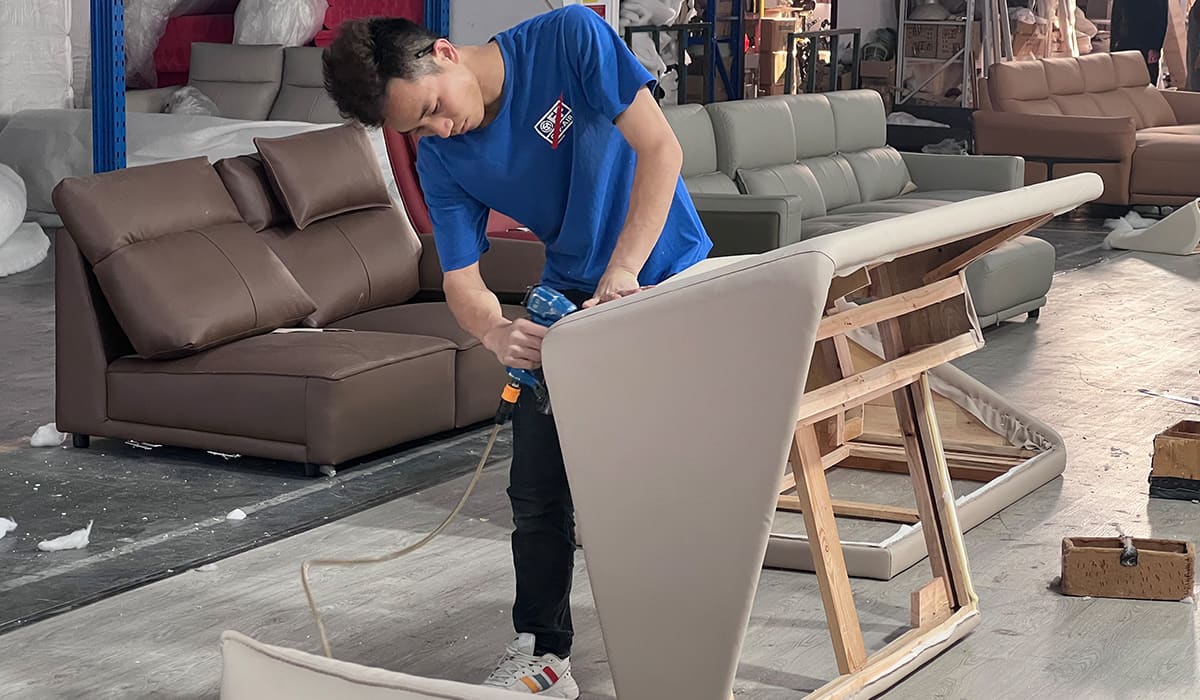
A dining chair that survives a showroom looks identical to one that survives a restaurant. The difference appears around month eig
Most mispriced sofa orders are quoting failures, not factory failures. An RFQ that names "a modular sofa, 4 seats, gray fabric" in

KANGA ILI KUONGEZA WECHAT YETU
Leave a Comment