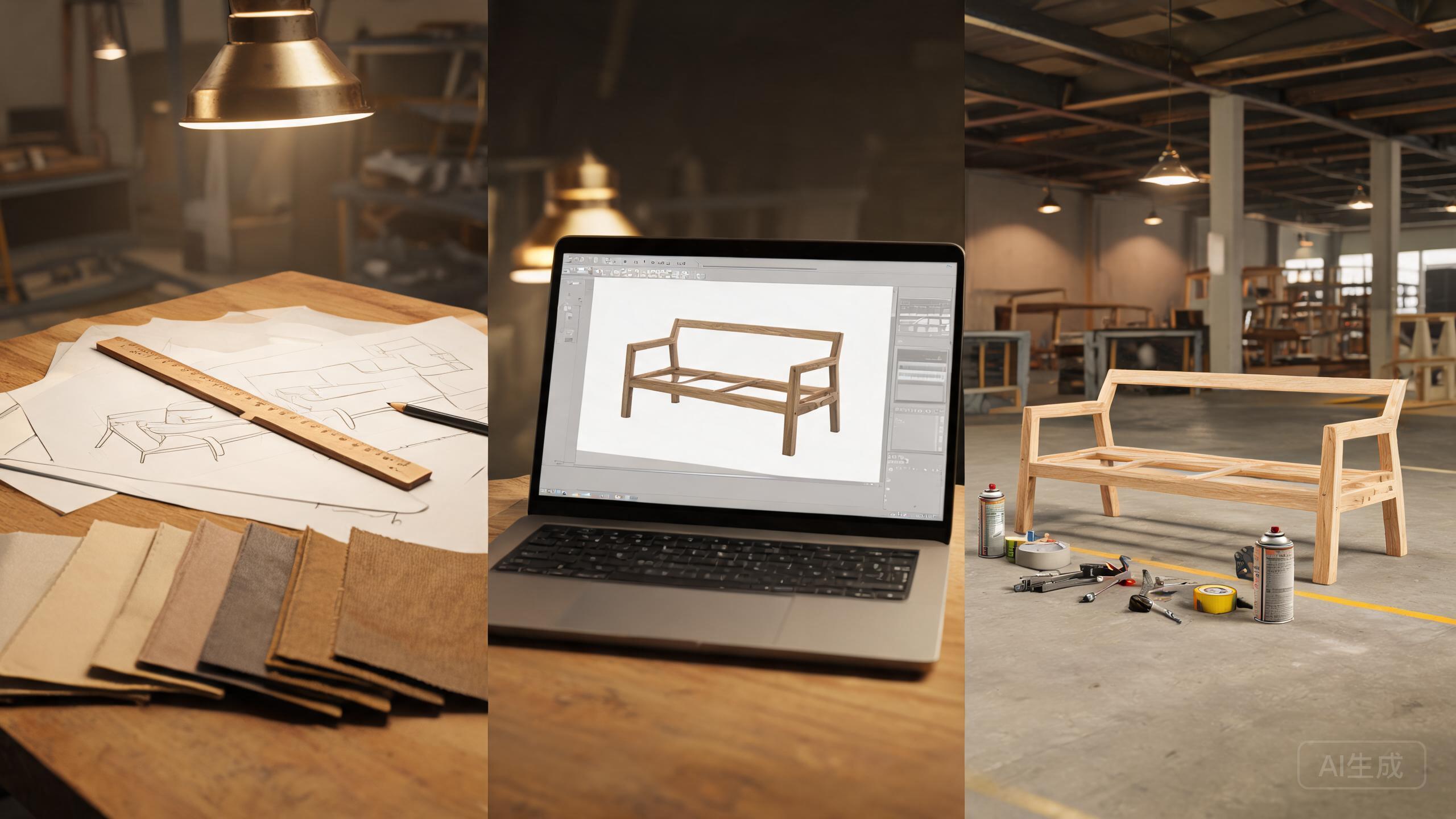
Product Guides
The Complete Guide to Furniture OEM and ODM Manufacturing in Foshan
A factory-floor guide to furniture OEM, ODM and private label manufacturing in Foshan: how to choose the right model for your busi
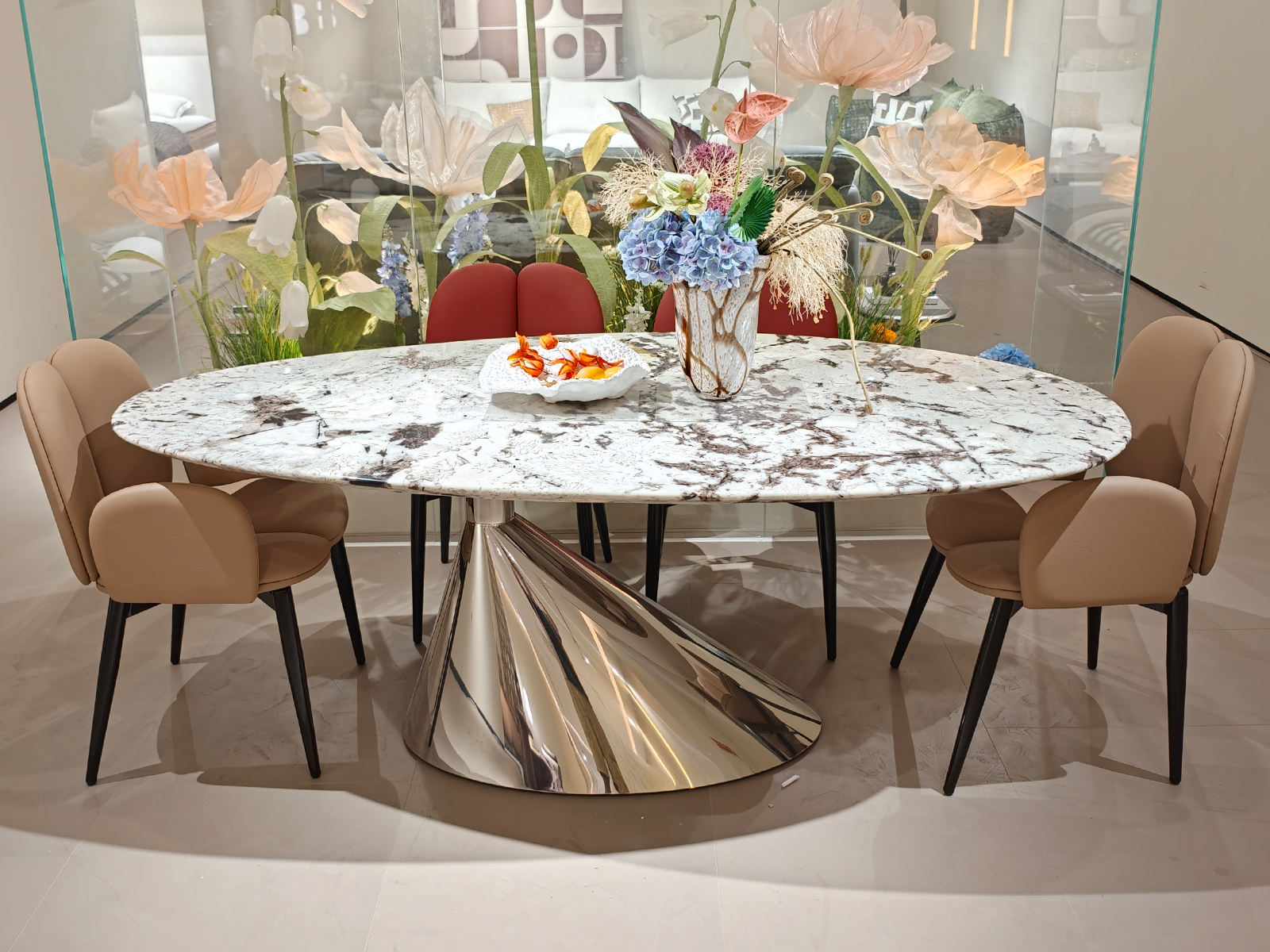
Short answer: Restaurant furniture and home dining furniture look similar but are engineered for completely different lifespans, load cycles and regulatory environments — and the wrong choice will cost you 3–5x in early replacement, failed inspections or customer injury liability.
Every restaurant buyer we work with at ATTICO CASA asks us at some point why commercial dining furniture costs more than the home version from the big-box store. Here is the honest breakdown, from the material specs to the legal risk.
A home dining chair sees 3–5 uses per day by 2–4 people. A restaurant dining chair sees 300–600 uses per day by a constantly rotating stream of guests with unknown weight, footwear and care habits. The home chair is designed for a 10–15 year residential lifespan. The commercial chair is designed for a 7–12 year lifespan under daily heavy use. These are not the same product at different prices — they are engineered for different jobs. See our complete guide to sourcing commercial dining furniture for the full procurement workflow.
The most visible difference between commercial and home dining furniture is not the style — it is how it is built to withstand the daily cycle of heavy restaurant use.
Home dining chairs typically use thin tubular steel (1.2mm wall) or rubberwood with basic mortise-and-tenon joints. Commercial-grade frames use:
A home dining chair is tested to 80–100kg static load. A commercial dining chair is tested to 150kg static load with a 50,000-cycle seating durability test (EN 12520 or ANSI/BIFMA X5.1). That means a commercial chair can seat a 150kg guest 50,000 times without frame failure, joint failure or visible deformation. A home chair may fail after 5,000 cycles of heavy use.
Commercial dining furniture is engineered for a world where guests scrape the floor with chair legs, drop steak knives on tabletops, spill red wine on upholstery, and slam cabinets. Every finish — powder coat, veneer, laminate, upholstery — is specified to resist this abuse.
Commercial dining furniture uses materials that would be overkill in a residential setting, but are non-negotiable in a venue that sees 100–300 guests per day.
Home dining upholstery uses fabrics with 15,000–20,000 Martindale rub counts. Commercial-grade upholstery starts at 40,000 Martindale and runs to 100,000+ for high-turnover venues. The fiber composition matters too — commercial upholstery is typically a blend of polyester and nylon with a stain-resistant treatment, not 100% cotton or linen (which stains permanently and wears thin quickly). Specify Martindale count explicitly in your order — "commercial-grade fabric" without a number is not a specification.
Tabletop surfaces tell the most obvious difference. A home dining table uses 12mm MDF with a melamine laminate. A commercial dining table uses 15mm+ particleboard or MDF with a high-pressure laminate (HPL) top layer rated for 500+ hours of abrasion resistance, plus an anti-fingerprint and heat-resistant coating that survives hot plates, steak knives and constant cleaning.
This is not a "nice to have" — it is a legal requirement. Commercial dining furniture in Europe must meet EN 1021-1 and EN 1021-2 (cigarette and match ignition tests). In the UK and some US states, furniture must meet BS 5852. In California, CAL TB 117 is mandatory. Home dining furniture has no fire retardant requirement at all — fabrics burn freely. If you install home furniture in a restaurant, you are operating without fire compliance insurance, and a fire or inspection failure can shut you down. Our certifications page lists the standards we test to on a project basis.
Commercial dining design optimizes for throughput and space, not residential comfort. Every centimeter matters when you are trying to fit 80 seats into a 120-square-meter dining room.
In a restaurant, furniture is cleaned daily — sometimes multiple times per shift. Commercial dining furniture is designed for this.
Commercial dining furniture costs 2–3x more upfront than the home version. The total cost of ownership tells a different story:
| Factor | Restaurant Furniture | Home Dining Furniture |
|---|---|---|
| Unit cost | $80–$300 per chair | $40–$120 per chair |
| Lifespan | 7–12 years | 2–4 years |
| Daily uses | 300–600 | 3–5 |
| Fire compliant | Yes (project-tested) | No |
| Warranty | 3–5 year frame | 1 year or none |
| Cost per 1,000 uses | $0.06–$0.14 | $1.10–$3.30 |
The cost-per-use difference is dramatic. Home furniture in a commercial setting will fail in 2–4 years, requiring a full replacement cycle and potentially a failed fire inspection. Commercial furniture pays for itself in under 3 years.
Every commercial dining program from ATTICO CASA is specified and documented to project requirements before production starts. We provide:
For mixed commercial programs — restaurant tables, chairs, bar stools and banquet seating from one factory — browse our dining collection or talk to our commercial furniture team.
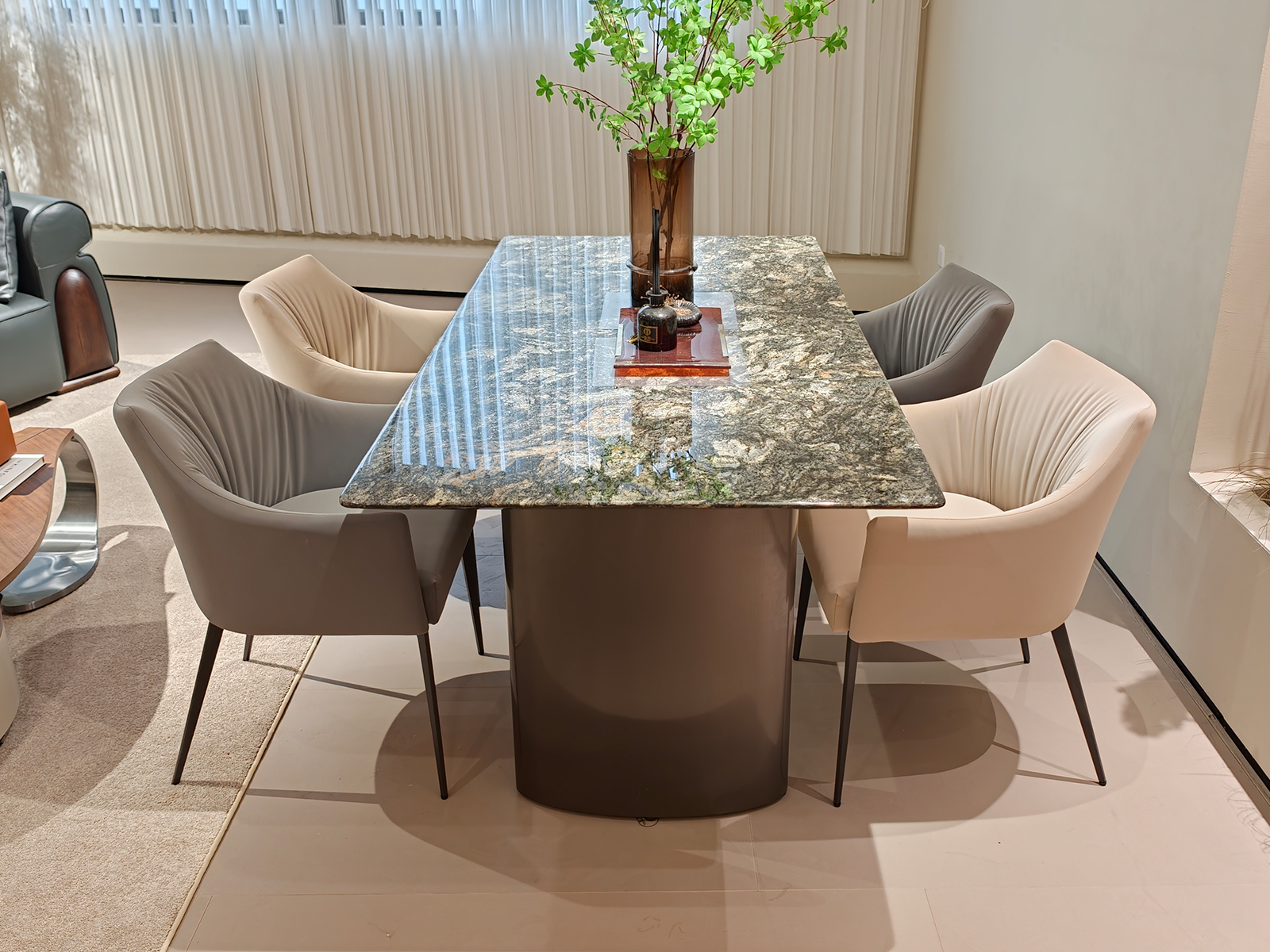
Technically yes, but you will likely fail fire safety inspections, void your property insurance, and face liability exposure if furniture fails during guest use. Most importantly, it will wear out and need replacement in 2–4 years instead of 7–12 years — costing you far more than commercial-grade furniture over the long run.
Depends on your location. EU venues need EN 1021-1/2, UK needs BS 5852, California needs CAL TB 117, and other US states have their own requirements (some reference NFPA 701). We test to the standard you specify and provide third-party test reports on a project basis.
Commercial-grade chairs are typically $80–$300 vs $40–$120 for the home version — about 2–3x upfront. But with a 7–12 year lifespan vs 2–4 years, the cost-per-use is 15–50x lower. Plus you get fire compliance, replaceable parts and a real warranty.
Yes. Every commercial dining order includes third-party testing to your specified standard — fire test, weight/load test (EN 12520 or ANSI/BIFMA), and a pre-shipment inspection of 100% of units for workmanship, specification compliance and packing integrity.
Absolutely. Restaurants often need different styles for the dining room, bar area and private banquet space. We can supply matching or complementary frame materials (steel, wood, metal), upholstery fabrics and tabletop surfaces across multiple style zones from one factory relationship — simplifying logistics and ensuring color/material consistency.
EN 1021 / BS 5852 / CAL TB 117 ready · 40,000+ Martindale upholstery · 2.0mm welded steel frames · MOQ from 50 pcs per model · EXW/FOB/CIF/DDP worldwide.
Address: No. 4, Jianye 2nd Road, Shatou Nanjin Village Industrial Zone, Jiujiang Town, Nanhai District, Foshan City, Guangdong Province, China
WhatsApp / WeChat: +86 150 1742 8790
Email: [email protected]

A factory-floor guide to furniture OEM, ODM and private label manufacturing in Foshan: how to choose the right model for your busi
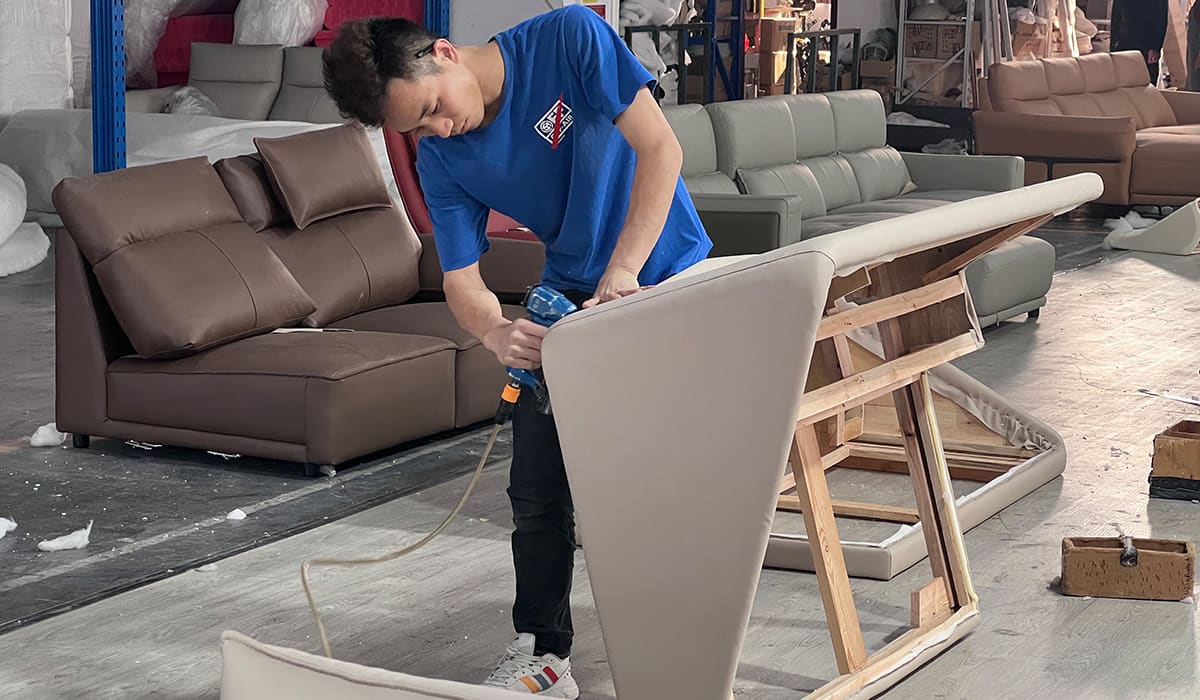
A factory-verification checklist for sofa importers: 6 signs of a real factory, 5 red flags to avoid, and how to run verification
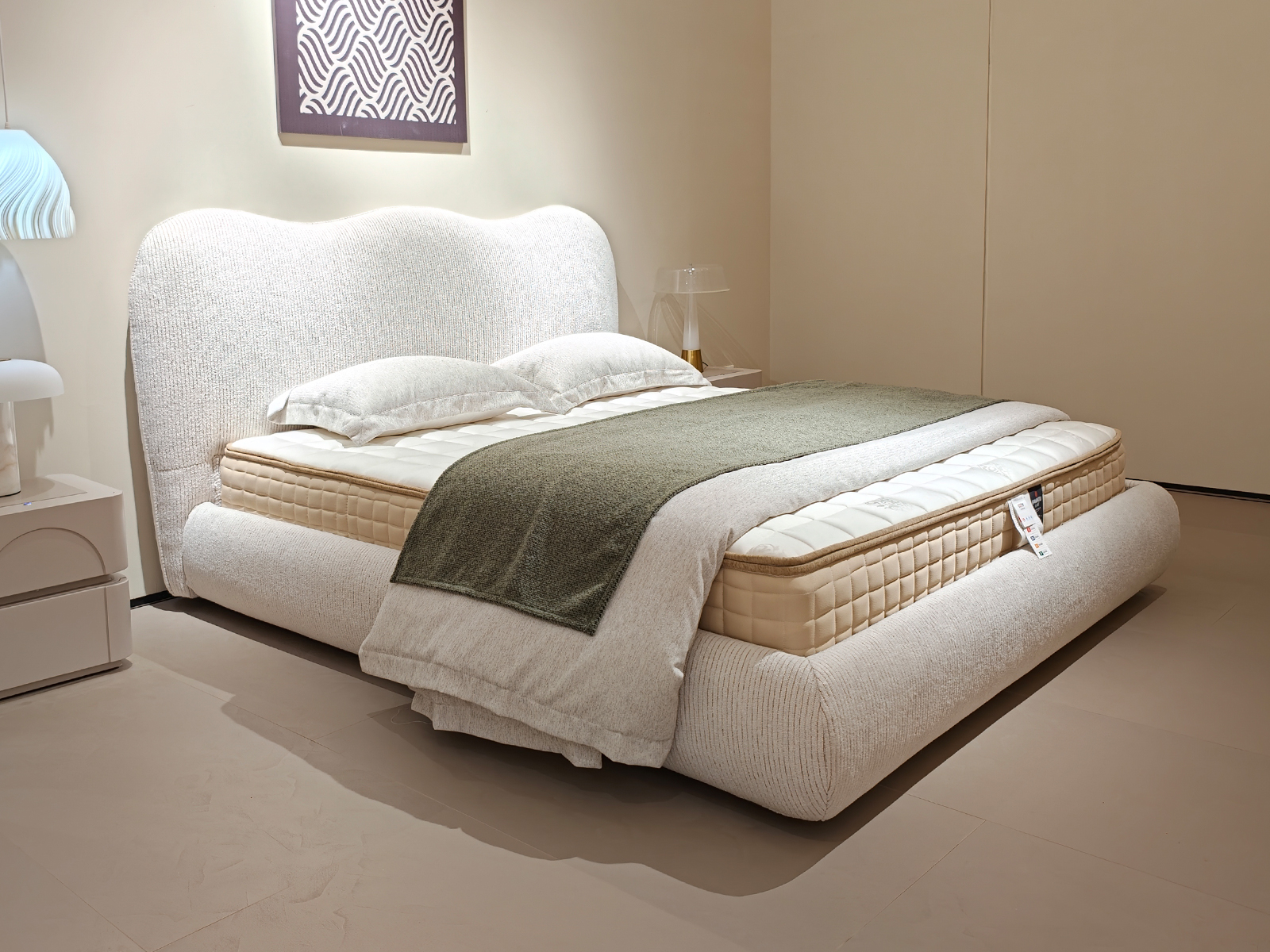
An importer's comparison of upholstered vs solid wood beds: retail margin, 40HQ loading count, manufacturing lead time, market fit

امسح لإضافة WeChat الخاص بنا
اتركوا تعليقاً