Shipping & Logistics
How to Verify a Real Sofa Factory in Foshan
A factory-verification checklist for sofa importers: 6 signs of a real factory, 5 red flags to avoid, and how to run verification
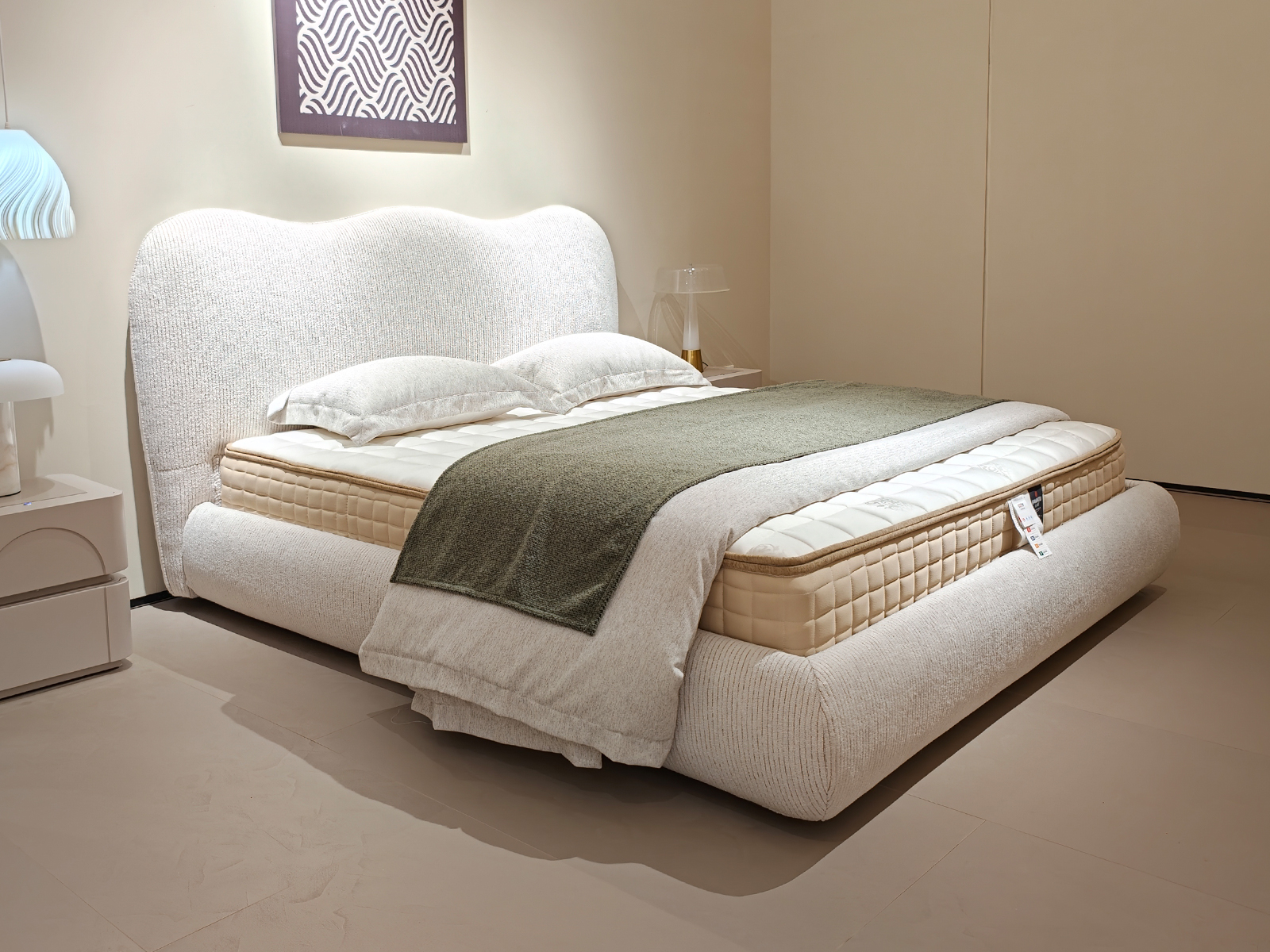
Short answer: Upholstered beds carry higher retail margins and sell faster in modern markets (North America, Europe, Australia). Wooden beds are more durable, cheaper to ship and dominate traditional markets (Asia, Middle East, budget Europe). Most importers carry both and let their retailers pick based on local demand.
At ATTICO CASA we manufacture both upholstered beds and solid wood beds out of the same Foshan factory. Here is the honest comparison importers need to know before committing container space.
| Factor | Upholstered Bed | Wooden Bed |
|---|---|---|
| Wholesale price range | $220–$520 | $180–$420 |
| Retail price range | $700–$1,600 | $500–$1,200 |
| Retail margin | 55–70% | 45–60% |
| 40HQ loading count (KD) | 32–40 sets | 25–32 sets |
| Assembly time | 15–20 min | 25–35 min |
| Typical market | North America, Europe, Australia | Asia, Middle East, budget EU |
| Warranty lifespan | 5–7 years frame, 3–5 years upholstery | 8–10 years frame |
Upholstered beds are the fastest-growing bedroom category in global wholesale. They are soft-feel, visually versatile, and have a built-in upsell story (coordinate with wall color, curtains, bedding).
Pros:
Cons:
Solid wood beds are the traditional workhorse of bedroom furniture. They are seen as more durable, more classic and more "serious" by traditional and budget-conscious buyers.
Pros:
Cons:
At first glance, wooden beds look more attractive because their wholesale cost is 15–20% lower. But let's run the math on a 200-piece order going from Foshan to Rotterdam:
| Cost factor | Upholstered Bed | Wooden Bed |
|---|---|---|
| FOB price per piece | $340 | $280 |
| 40HQ needed for 200 pcs | 5.5 containers | 6.3 containers |
| Ocean freight per 40HQ (FOB-Rotterdam) | $4,000 | $4,000 |
| Freight cost per piece | $110 | $126 |
| Total landed cost per piece | $450 | $406 |
| Typical retail price | $999 | $799 |
| Gross margin per piece | $549 (55%) | $393 (49%) |
Upholstered beds give more gross margin per piece despite higher FOB cost because they carry a higher freight density AND higher retail pricing. Wooden beds look cheaper on paper but are less profitable at scale because they load less efficiently.
The strongest driver of which bed type to carry is your target market. Here is the split we see across our importer base:
We manufacture both upholstered beds and solid wood beds from one Foshan factory, which means you can mix both in one container, one import order and one production schedule. Most importers build their first program with a 60/40 split (upholstered/wooden) and adjust after 6 months of sales data. Our recommendation is always the same: test both in small quantities, let your retailers report what moves, then concentrate volume on what sells.
See our complete guide to sourcing bedroom furniture for the full frame material and foundation specification workflow. Browse our live bed collection or wholesale bedroom program for MOQ, lead time and pricing.
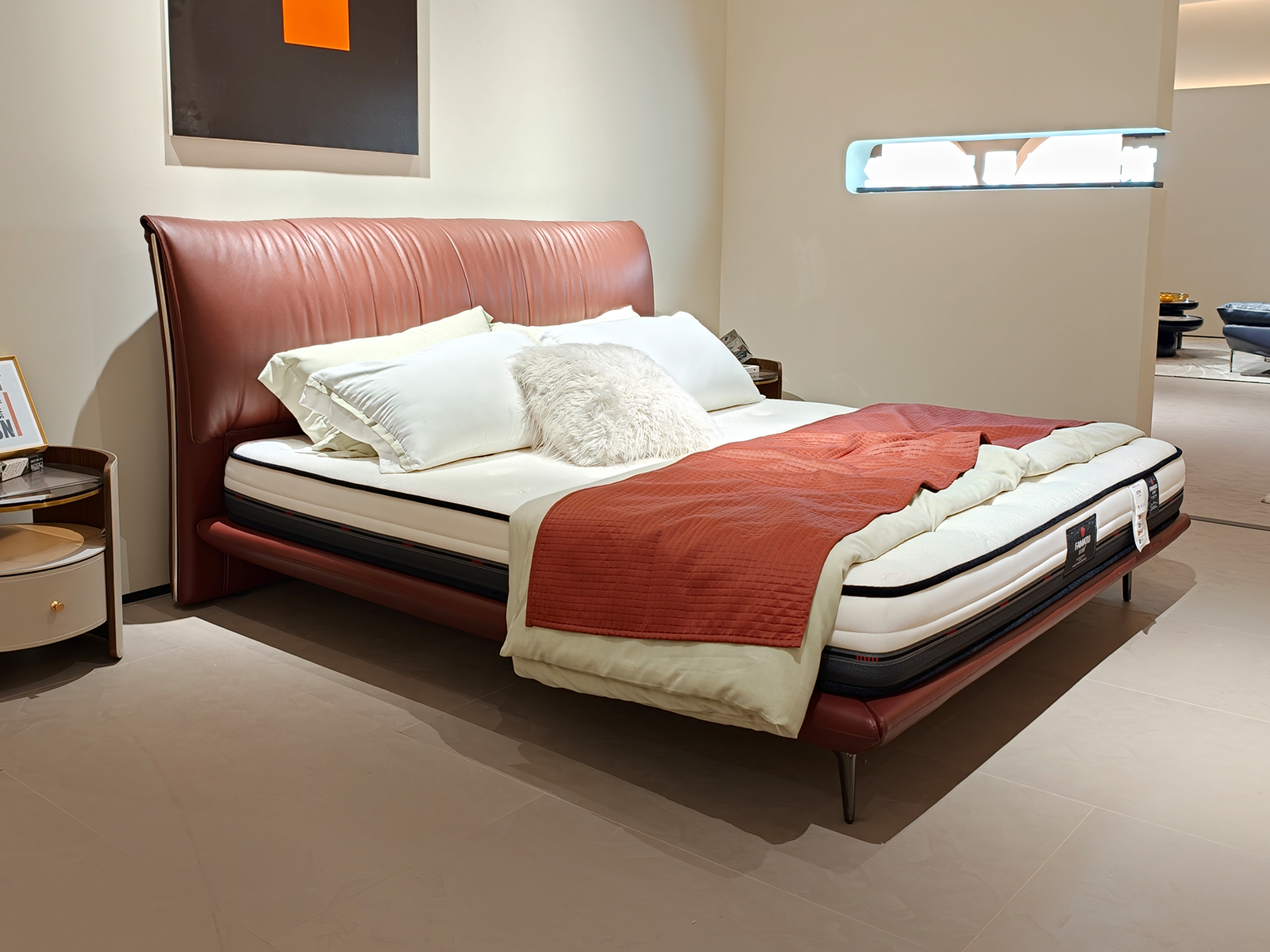
Absolutely. We regularly consolidate programs where upholstered bed heads share a container with solid wood bed frames, matching nightstands, dressers and mattresses. One production schedule, one set of import documents, one arrival date — and you optimize container utilization by balancing the bulkier upholstered heads against the denser wood frames.
They are bulkier per piece, but the impact on per-unit freight cost is actually less than you might think. An upholstered headboard is about 5cm wider than a solid wood bed frame when packed. For most orders, the per-piece freight difference works out to less than $10 vs solid wood. But the retail margin difference is $150+ in the upholstered bed's favor.
Yes — we can supply upholstery fabric tested to EN 1021, BS 5852, CAL TB 117 or NFPA 701 on a project basis. This is standard for hotel and hospitality projects, and available for residential programs at a small premium. See our certifications page for the standards we test to.
Yes. Hydraulic storage beds and drawer-base beds are available in both upholstered headboard and solid wood headboard options. The hydraulic mechanism is SGS-tested to 30,000 open/close cycles and carries a 5-year warranty.
50 pieces per model, with mixed-container loading across models and product types (upholstered beds, wooden beds, nightstands, dressers, mattresses). Trial orders below MOQ are available at a 10–15% premium for market testing.
25+ bed frame models · KD flat-pack · MOQ from 50 pcs per model · 45–60 day lead time · EXW/FOB/CIF/DDP worldwide.
Address: No. 4, Jianye 2nd Road, Shatou Nanjin Village Industrial Zone, Jiujiang Town, Nanhai District, Foshan City, Guangdong Province, China
WhatsApp / WeChat: +86 150 1742 8790
Email: [email protected]

A factory-verification checklist for sofa importers: 6 signs of a real factory, 5 red flags to avoid, and how to run verification
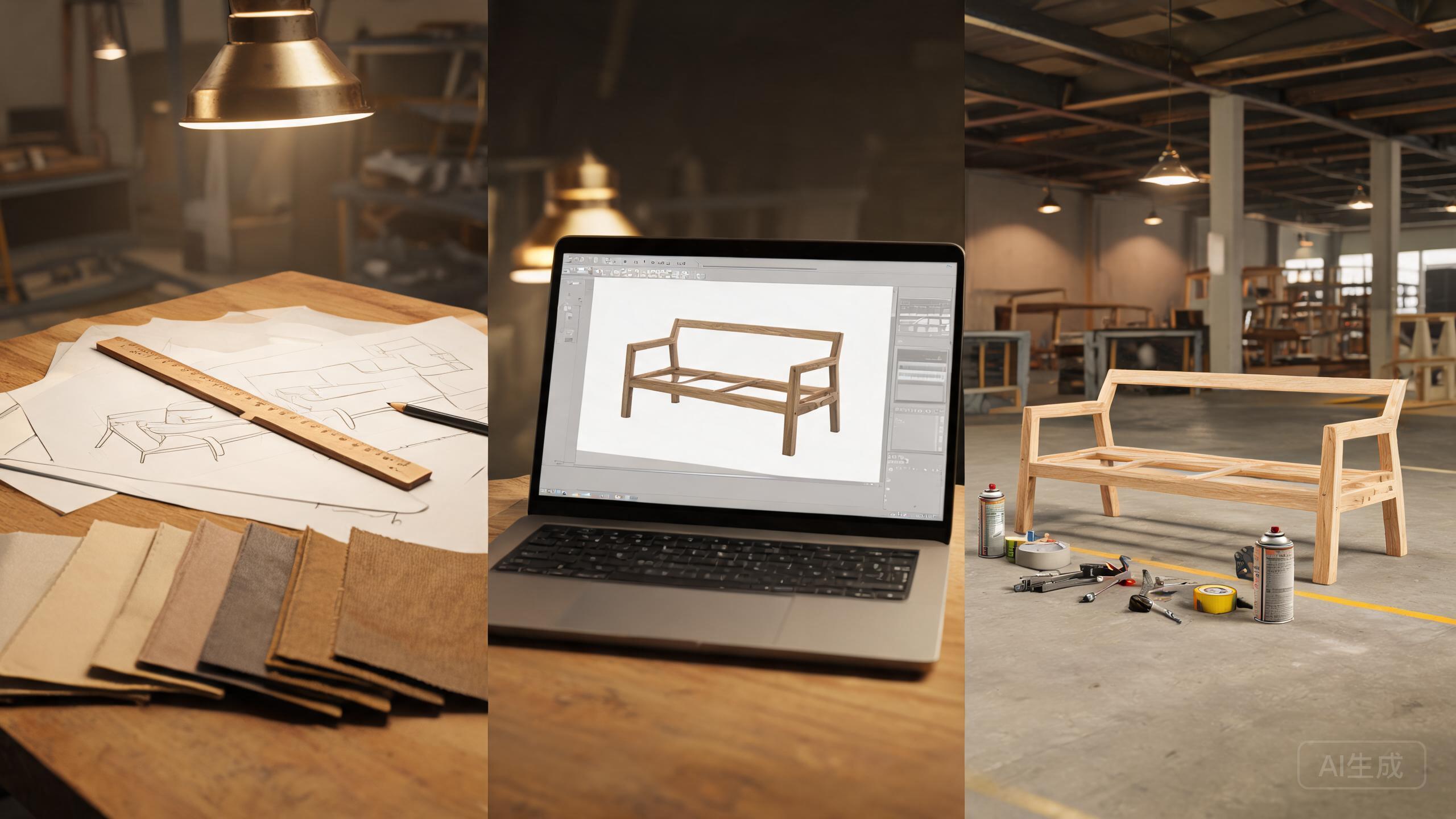
A decision framework for furniture importers: OEM vs ODM on design ownership, IP protection, tooling cost, time to market, MOQ and
A factory-floor guide to upholstered bed and bedroom furniture sourcing from China: how to pick the right foundation system, match

امسح لإضافة WeChat الخاص بنا
اتركوا تعليقاً